
photo
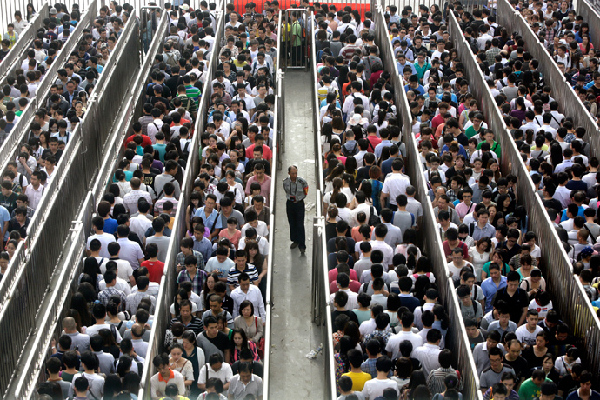 Beijing Bureau of Statistics says that the city has seen a steady
decline in the growth rate of permanent residents in the city in the
past five years.
Beijing Bureau of Statistics says that the city has seen a steady
decline in the growth rate of permanent residents in the city in the
past five years.
Beijing Bureau of Statistics says that the city has seen a steady
decline in the growth rate of permanent residents in the city in the
past five years.
Changes in major industries, relocation
of certain non-administrative functions outside the capital, rise of
living and commuting costs have been cited as the main factors for the
decline.
Around 57% of permanent residents in Beijing live between the third ring road and the sixth ring road. About half of them live in residential areas outside the fifth ring road in Beijing.
Around 57% of permanent residents in Beijing live between the third ring road and the sixth ring road. About half of them live in residential areas outside the fifth ring road in Beijing.
Beijing had a permanent residential
population of over 21.5 million people by the end of 2014, including
more than 8.1 million permanent living migrants from other cities.
The growth rate of migrants living
permanently in Beijing has seen a rapid decline i
n recent years from
64.2% in the past three years to 43.5% in 2014.
The report also says that the burden on the city center is gradually being transferred to the city's new development zones.
But public services like schools,
hospitals and other services are still concentrated in the city center.
The uneven distribution of these public resources has led to congestion
and environmental issues.
Related: Beijing to ease residency permits for migrants
Beijing will pilot a "point system" in east suburban district of Tongzhou to allow its migrants to claim permanent resident permits or "hukou".
Related: Beijing to ease residency permits for migrants
Beijing will pilot a "point system" in east suburban district of Tongzhou to allow its migrants to claim permanent resident permits or "hukou".
The system was included in the
comprehensive pilot plan for promoting new-type urbanization released
Wednesday by the National Development and Reform Commission (NDRC),
China's top economic planner.
According to the district government of
Tongzhou, it will adopt a "point system" for migrant people in the
district based on various criteria including stable employment,
accommodation, social security, and duration of residency, etc.
Migrants can transform their household
registration status to local residents after reaching a required amount
of points. The authorities have yet to disclose more details.

No comments:
Post a Comment