
photo
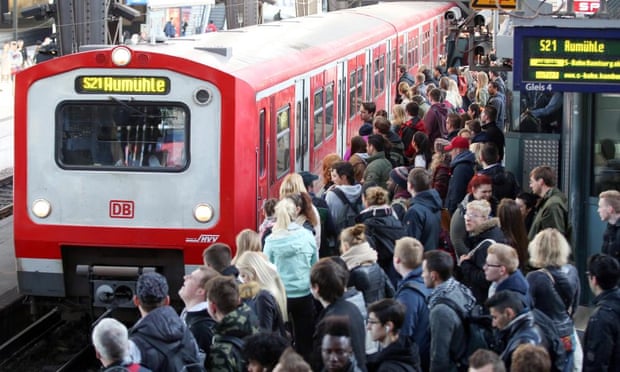
Millions of German commuters have been left stranded after train drivers went on strike indefinitely for the ninth time in 10 months, demanding improved negotiating rights, higher pay and a shorter working week.
Marking a stinging blow to Germany’s reputation as Europe’s most efficient and smooth-running economy, the strike has brought freight and passenger trains to a standstill and is causing havoc since starting in the early hours of Wednesday.
Each day that workers in the small but powerful GDL train drivers’ union walk off the job is estimated to cost the German economy around €100m (£71m). There are fears it could make a sizeable dent in its GDP and further hamper the already sluggish eurozone, which is highly dependent on German growth.
It comes at a time of rising militancy by a range of workers – from postal staff and childminders to airline pilots and hospital carers – who have been downing tools in an explosion of frustration after years of enduring frozen wages out of a sense of public spirit during times of economic strain. Now that the German economy is growing again, they would finally like a share of the spoils.
Even as two in three long-distance trains stayed parked in sidings and hundreds more commuter services were cancelled, negotiations between the national, state-owned rail carrier Deutsche Bahn (DB) and GDL were said to be continuing in an effort to reach a deal.
But GDL has said it will strike indefinitely and will only inform passengers 48 hours in advance of any decision to return to work. It said it expected the strike to last considerably longer than a six-day action earlier this month, which was the longest in DB’s 21-year history.
Passengers who found themselves stranded when the strike began at 2am were offered beds in so-called “Hotelzüge”, or hotel trains – sleeper trains that had been grounded by the industrial action. DB’s attempts to accommodate them was seen as part of an effort in damage limitation as many expressed their exasperation and experts predicted the strike could affect the long-term popularity of the train network, considered one of the most efficient in Europe.
Millions of German commuters have been left stranded after train drivers went on strike indefinitely for the ninth time in 10 months, demanding improved negotiating rights, higher pay and a shorter working week.
Marking a stinging blow to Germany’s reputation as Europe’s most efficient and smooth-running economy, the strike has brought freight and passenger trains to a standstill and is causing havoc since starting in the early hours of Wednesday.
Each day that workers in the small but powerful GDL train drivers’ union walk off the job is estimated to cost the German economy around €100m (£71m). There are fears it could make a sizeable dent in its GDP and further hamper the already sluggish eurozone, which is highly dependent on German growth.
It comes at a time of rising militancy by a range of workers – from postal staff and childminders to airline pilots and hospital carers – who have been downing tools in an explosion of frustration after years of enduring frozen wages out of a sense of public spirit during times of economic strain. Now that the German economy is growing again, they would finally like a share of the spoils.
Even as two in three long-distance trains stayed parked in sidings and hundreds more commuter services were cancelled, negotiations between the national, state-owned rail carrier Deutsche Bahn (DB) and GDL were said to be continuing in an effort to reach a deal.
But GDL has said it will strike indefinitely and will only inform passengers 48 hours in advance of any decision to return to work. It said it expected the strike to last considerably longer than a six-day action earlier this month, which was the longest in DB’s 21-year history.
Passengers who found themselves stranded when the strike began at 2am were offered beds in so-called “Hotelzüge”, or hotel trains – sleeper trains that had been grounded by the industrial action. DB’s attempts to accommodate them was seen as part of an effort in damage limitation as many expressed their exasperation and experts predicted the strike could affect the long-term popularity of the train network, considered one of the most efficient in Europe.

No comments:
Post a Comment